At BSB Legal, we specialize in various areas of law, including corporate law, commercial law, employment law, intellectual property, real estate law, and dispute resolution. Whether you are starting a business, expanding your operations, seeking legal advice, or require representation in legal proceedings, we are committed to delivering exceptional services that exceed your expectations.
Forgery is a serious crime that involves creating, altering, or using false documents, signatures, or other items with the intent to deceive others. It can lead to severe legal consequences, including fines and imprisonment, especially in places like Dubai and the UAE, where forgery cases are treated with strict enforcement. Understanding the various types of forgery case can help individuals avoid legal trouble and recognize fraudulent activities. In this article, we’ll explore different types of forgery cases, their implications, and ways to protect yourself.
1. Signature Forgery
Signature forgery is one of the most common types of forgery cases. It involves forging or faking someone else's signature with the intent to deceive or commit fraud. This often occurs in situations such as signing checks, contracts, or legal documents without the person's consent. Signature forgery can lead to criminal charges if proven, resulting in severe penalties.
Common Examples of Signature Forgery:
Signing another person's name on a financial document.
Falsifying signatures on official government forms.
Forging signatures on legal contracts.
2. Document Forgery
Document forgery involves altering or creating false documents to gain an advantage or deceive others. This type of forgery case can range from modifying legal documents to creating entirely fake identification cards, certificates, or licenses. Document forgery often has serious consequences, especially if it pertains to legal or government documents.
Examples of Document Forgery:
Creating a fake passport or identification card.
Altering the terms of a contract or agreement.
Forging official stamps and seals.
3. Currency Forgery
Currency forgery, also known as counterfeiting, is the illegal act of reproducing currency to pass it off as genuine money. Counterfeiting money is considered a severe crime worldwide, including in Dubai and the UAE. It undermines the economy and causes significant losses to businesses and individuals.
Signs of Currency Forgery:
Poor quality printing or ink smudges on the currency.
Lack of security features like watermarks or holograms.
Inconsistent size, shape, or texture compared to genuine currency.
4. Identity Theft and Forgery
Identity theft involves stealing someone's personal information, such as their name, social security number, or bank details, to commit fraud. Often, it involves forgery cases where false documents, accounts, or IDs are created in the victim's name. Identity theft can cause serious harm to the victim’s financial security and reputation.
Methods Used in Identity Theft:
Creating fake credit cards or bank accounts.
Falsifying identification to access loans or services.
Using stolen data to forge documents in another person’s name.
5. Art and Collectibles Forgery
Art forgery is another type of forgery case that targets valuable art, antiques, or collectibles. It involves creating counterfeit pieces and passing them off as genuine works. Art forgery can lead to major financial losses for buyers and collectors. In Dubai, where art and antiques hold cultural and financial significance, such forgery is treated strictly.
Typical Methods of Art Forgery:
Copying famous works of art.
Using aged materials to replicate antiques.
Adding fake signatures or provenance documents to boost an item’s value.
6. Digital Forgery
With the rise of technology, digital forgery has become increasingly prevalent. It involves using digital tools to manipulate or create fake digital documents, images, or identities. Cybercriminals often engage in digital forgery for financial gain, blackmail, or to deceive others online.
Examples of Digital Forgery:
Altering images using photo editing software.
Creating fake websites or email addresses.
Falsifying electronic signatures and contracts.
Consequences of a Forgery Case
Forgery cases are treated with high severity under UAE law. Penalties may include imprisonment, fines, or both, depending on the type and gravity of the forgery. The UAE legal system emphasizes strict punishments to deter individuals from committing such offenses. Defending oneself in a forgery case often requires experienced legal counsel to navigate the complexities of the legal system.
How to Protect Yourself from Forgery Cases
Be Cautious with Personal Information: Never share sensitive information, such as your signature, bank details, or identification data, with untrusted sources.
Verify Authenticity: If you receive documents, currency, or contracts, carefully verify their authenticity. This includes checking watermarks, and seals, or contacting the issuing authority.
Secure Documents: Keep important documents like IDs, passports, and financial papers in a secure location.
Use Secure Digital Practices: Use strong passwords, multi-factor authentication, and trusted software to protect against digital forgery and cyber fraud.
Engage Legal Support: If you suspect you are involved in or accused of a forgery case, consult a qualified legal professional for immediate assistance.
Conclusion
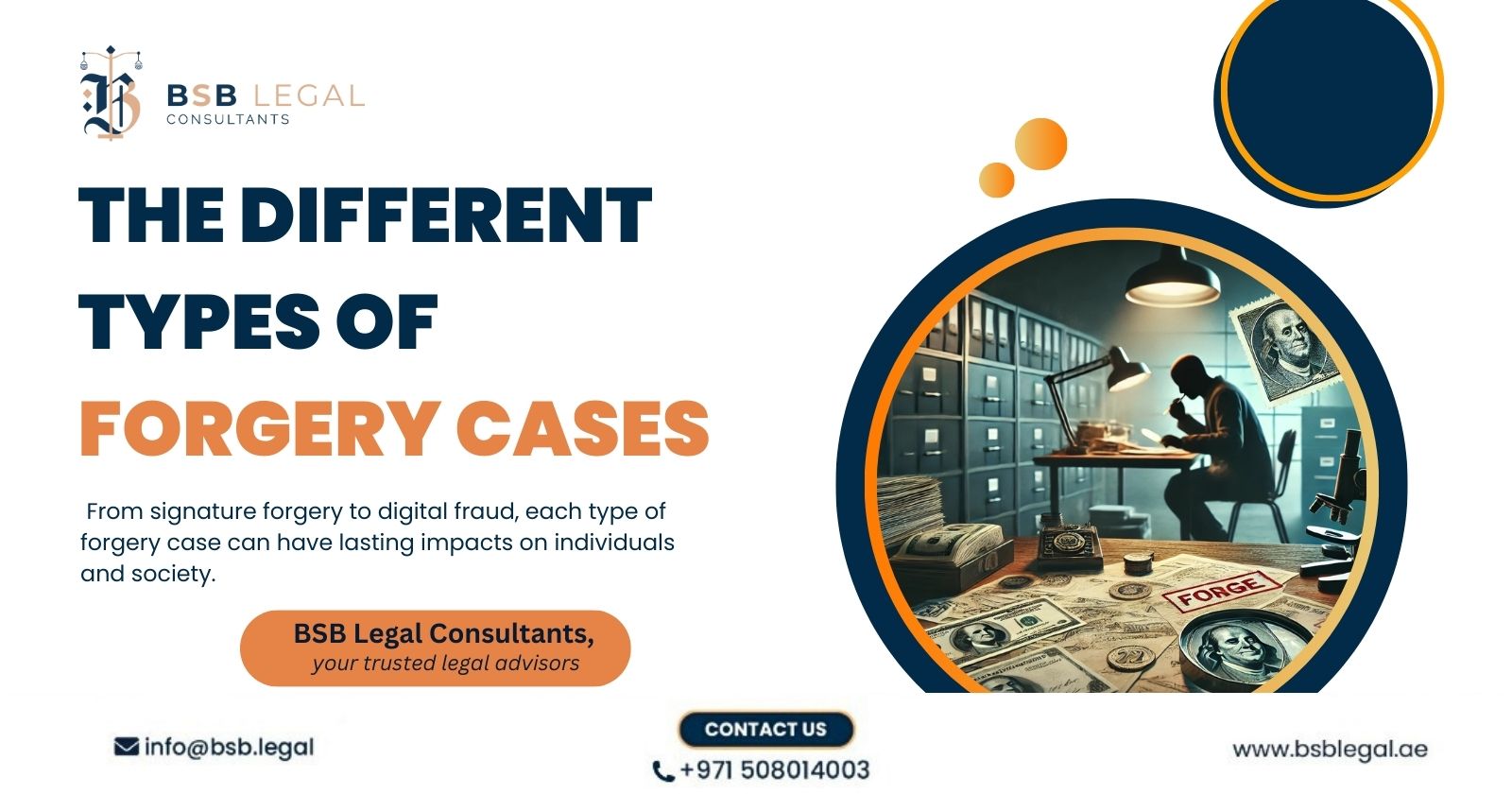
Forgery is a diverse and serious crime with wide-ranging implications. From signature forgery to digital fraud, each type of forgery case can have lasting impacts on individuals and society. Staying informed, vigilant, and proactive can help reduce the risks associated with forgery and prevent becoming a victim or perpetrator of such cases. By understanding the different forms and potential consequences, individuals and businesses in Dubai and beyond can take steps to safeguard their legal and financial interests.


